Making Cookies: A Sweet Script for Authentic Branding
In the crowded landscape of digital design, finding a typeface that genuinely connects with an audience can feel like searching for a needle in a haystack. We often see the same geometric sans-serifs and rigid serifs repeated across websites and social feeds, creating a sea of sameness that fails to evoke emotion. This is where Making Cookies enters the conversation. It is not merely a collection of glyphs; it is a statement piece designed to bring warmth, personality, and a human touch to your creative projects. As a script font, it offers a fluid, connected aesthetic that mimics natural handwriting, bridging the gap between professional digital design and the intimacy of a handwritten note.
Understanding the Anatomy of a Beautiful Script Font
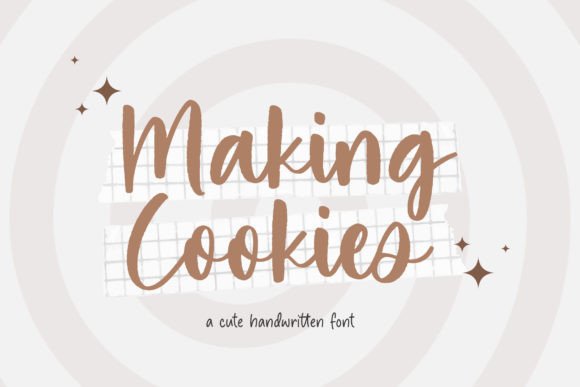
When we talk about Making Cookies, we are discussing a typeface with a distinct personality. Visually, it balances the spontaneity of a handwritten font with the structural integrity required for modern typography. It avoids the overly jagged edges that can make some script fonts difficult to read, opting instead for smooth curves and a consistent baseline that guides the eye effortlessly from left to right. The overall appeal lies in its versatility; it feels organic and approachable, yet it carries enough weight to be used as a display font for headlines where you want to capture attention immediately.
The character of Making Cookies is defined by its rhythm. Good typography has a beat, and this font creates a cadence that feels energetic yet relaxed. It is perfect for designs that aim to convey authenticity. If your brand identity relies on storytelling, craftsmanship, or personal connection, this typeface serves as a visual ambassador for those values. It tells the viewer that there is a human behind the design, which is increasingly rare and valuable in an age of automation.
Where This Font Shines: Real-World Applications
The true test of any creative font is how it performs in the wild. Making Cookies excels in environments where emotion and engagement are paramount. Let’s break down where this typeface fits best into your workflow.
Social Media and Digital Marketing
In the fast-scrolling world of Instagram, Pinterest, and TikTok, static text often gets ignored. Using Making Cookies for social media graphics can stop the scroll. It works exceptionally well for overlaying quotes, announcing sales, or creating stylized headers for video thumbnails. The font adds a layer of personality that standard web-safe fonts simply cannot provide. It helps in building a recognizable visual language that followers can associate with your content, aiding in brand recall.
Invitations, Greeting Cards, and Stationery
This is the natural habitat for a script font. Whether you are a professional stationer or a hobbyist creating cards for friends, Making Cookies offers the elegance required for wedding invitations and the playfulness needed for birthday cards. Its fluidity makes it ideal for packaging design as well, particularly for artisanal goods, bakeries, or boutique products where the packaging needs to communicate a "homemade" or "small-batch" quality.
Watermarks and Branding Assets
For photographers, artists, and digital creators, protecting work while maintaining aesthetics is a constant challenge. A watermark needs to be visible enough to serve its purpose but not so distracting that it ruins the image. Making Cookies provides a sophisticated solution. As a watermark, it looks like a signature rather than a stamp, adding value to the image rather than detracting from it.
Strategic Typography: How Fonts Influence Perception
Choosing a typeface is a strategic business decision, not just an artistic one. The font you select for your logo design or website header communicates your brand's values before a customer reads a single word. Making Cookies influences brand perception by signaling approachability and creativity. It suggests that a brand is friendly, accessible, and values aesthetic details.
However, typography is also about hierarchy and readability. While Making Cookies is beautiful, it is a display typeface. This means it is designed for impact, such as headlines, logos, and pull quotes. It is generally not recommended for long-form body text, such as blog posts or whitepapers, where a serif font or sans serif font would offer better legibility at smaller sizes. The strength of Making Cookies lies in its ability to draw the eye in, setting the stage for the more utilitarian fonts that handle the heavy lifting of the body copy.
Practical Guidance for Implementation
Integrating a new font into your design system requires a thoughtful approach. Here is how to get the most out of Making Cookies without compromising your design's professionalism.
Mastering Font Pairing
The most effective way to use a premium font like this is to pair it with a contrasting typeface. Because Making Cookies has a lot of movement and texture, it pairs best with something clean and geometric. A simple sans serif font with ample white space creates a beautiful juxtaposition, allowing the script font to stand out as the hero element while the secondary font ensures the message is clear. Avoid pairing it with other decorative or handwritten fonts, as this can create visual clutter and make the design feel disjointed.
Evaluating Project Fit
Before applying the font, ask yourself: does this project require a formal or a casual tone? Making Cookies leans casual to semi-formal. It is perfect for a lifestyle brand, a creative agency, or a personal blog. It might be less suitable for a corporate law firm or a financial institution where trust is built through stability and conservatism. Knowing your audience is key; if your target demographic values creativity and warmth, this font is a strong choice.
Testing and Licensing
Always test your typography in context. Place Making Cookies on your mockups for web design and editorial design to see how it interacts with your color palette and imagery. Check the spacing (kerning and tracking) to ensure it flows naturally with the words surrounding it. Additionally, ensure you understand the licensing. If you are using this for commercial font applications—such as client work, merchandise, or products for sale—verify that your license covers these specific use cases to avoid legal issues down the road.
Ultimately, Making Cookies is more than just a design asset